Speaker Fees 2026: What Conference Organizers Actually Pay
What do conference organizers actually pay speakers in 2026? Concrete fee ranges by junior, mid-level, senior tiers — plus the hidden costs most miss when comparing.
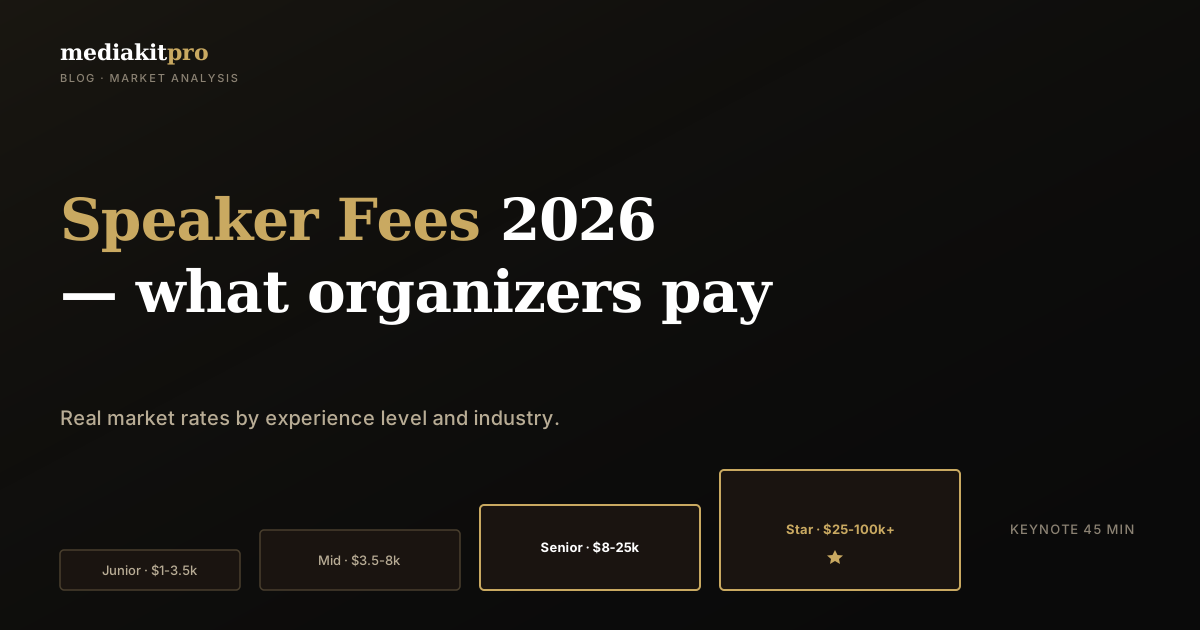
"What does a speaker cost?" — one of the most common questions from conference organizers. And at the same time one of the most common questions from emerging speakers wanting to position their own fees. This article shows you the real fee ranges for 2026 — by experience level, industry, and format, plus the hidden cost components missing from most comparisons.
Basis: Analysis of fee disclosures from 200+ speaker media kits in the US and UK markets, plus interviews with booking agencies, event managers, and L&D buyers.
Why speaker fees are so opaque
Three reasons make pricing in the speaker world particularly murky:
- Private business: Unlike consulting hourly rates, speaker fees are individually negotiated — no industry body publishes standard lists.
- "On request" culture: About 60 % of all media kits don't name pricing. That distorts every market perception.
- Different formats: A 20-min keynote, 45-min keynote, and 4-hour workshop differ 3–5× in price.
This opacity produces both under- and overpriced speakers — and uncertain organizers who don't know if they're paying too much.
Fee ranges 2026 by experience level
We split the market into four tiers. These aren't industry standards but empirical observation.
| Tier | Experience | Keynote 45 min | Workshop ½ day | 2-day Strategy |
|---|---|---|---|---|
| Junior | < 50 talks / no book | $1,000–3,500 | $800–2,000 | n/a |
| Mid-level | 50–200 talks / 1+ book | $3,500–8,000 | $2,000–5,000 | $8,000–15,000 |
| Senior | 200+ talks / bestseller | $8,000–25,000 | $4,000–12,000 | $15,000–40,000 |
| Star/Top-Tier | TV recognition, international reach | $25,000–100,000 | $12,000–35,000 | $40,000–200,000 |
Important: These ranges are gross fees without travel and accommodation. More on that below.
Factors that shift the fee
Three axes shift the fee significantly up or down:
1. Industry of the organizer
- Fortune 500, banks, insurance, tech: + 30–50 % on the range (budget-strong)
- Mid-market companies: Standard range
- Non-profits, education: −30–50 % (often special conditions)
- Government: Standard range, but procurement rules apply
2. Internationality
- English talk for US/UK organizer: Standard
- Talk requiring travel >4 hr flight: + 30–50 % plus business class travel
- Global conferences (Davos, SXSW, etc.): Top-tier fees even for mid-level
3. Exclusivity / industry block
- "Only for our industry, no competitor in same quarter": + 20–30 %
- Multi-year coaching engagement: Fee often "Retainer + Performance bonus"
What's typically included in the fee
Standard expected:
- Prep call (60–90 min) for content adaptation
- Slide adaptation for organizer industry/examples
- Talk itself with Q&A
- 15–30 min networking afterward
Standard NOT included:
- Travel and accommodation (rail first class or flight economy under 4 hr, business class over; 4-star hotel)
- Media rights (recording, livestreaming, republication) — license separately
- Follow-up sessions (1:1 coaching, follow-up workshops) — separate booking
Hidden cost components
This is where negotiations often go sideways. Three line items typically discussed only after contract:
Recording / republication
If the organizer records and uses internally, that's media rights. Standard:
- Internal sharing (employee wiki): often included
- External publication (YouTube, website): + 20–50 % surcharge
- Promotional use (marketing campaign with talk image): + 50–100 %
Speaker bureau commission
If booking goes through an agency (CSA, NSB, Harry Walker), the agency takes 15–25 % commission of gross fee. Usually from the speaker's share, not the organizer's budget.
Tax considerations
For US speakers fees are typically gross. For international speakers (e.g., German speaker invited to US event):
- W-8BEN form to claim treaty benefits
- 30 % default withholding without W-8BEN
- Tax treaty rates can reduce significantly
For US-to-EU: VAT considerations apply, especially if speaker has VAT ID and provides services to EU business clients.
How to position your own fee realistically
Three steps:
Step 1: Honest self-assessment of tier
Be honest. Concrete markers:
- Junior: Under 50 paid talks, no book, your press quotes are recommendations from personal network.
- Mid-level: 50+ paid talks, at least 1 industry book or substantial media presence.
- Senior: 200+ talks, at least 1 bestseller or established Fortune 500 relationships.
Step 2: Market research
Look at 5–10 media kits from speakers in your tier and industry. What pricing logic do they use? What's the spread? Examples and analysis we've collected here.
Step 3: Courage to name a range
Not "on request" — but concrete range in media kit. That's the biggest lever:
- Pre-filters the right inquiries
- Positions you in the desired segment
- Saves endless email back-and-forth
Why "fees on request" is one of the most expensive media kit mistakes, we explain in detail in the mistake article.
When to raise? When to negotiate?
Raise fees
Rule of thumb: Every 12 months +15–20 % if demand is there. Concrete triggers:
- You get inquired more often than you have slots
- You decline inquiries because no slot left
- You regularly get follow-up inquiries after talks
- You have a new book / award / TV appearance — new marker justifies jump
Negotiate fees (downward)
There are legitimate reasons for discounts:
- Strategic brand / reach: "We're CNN and recording this" — 30 % discount often sensible
- Non-profit with small budget but big impact: Discount with pro-bono share
- Multi-event booking: 5 talks per year = 10–15 % discount
Don't discount:
- "We don't have a big budget" (without trade)
- "But you'll get great exposure!" (vague marketing promise)
- "Other speakers do it for half" (always a trap)
What organizers actually budget
From conversations with event managers:
| Event type | Speaker budget per slot |
|---|---|
| Mid-market conference (200–500 attendees) | $3,000–10,000 |
| Industry mega-conference (1,000+ attendees) | $8,000–30,000 |
| Fortune 500 internal event | $10,000–50,000 |
| Award show / gala | $20,000–100,000 |
| Non-profit event | $0–3,000 (often pro-bono) |
| International top conference | $25,000–200,000 |
Important: That's just the speaker fee budget. Travel + hotel often come from a separate line item.
Conclusion + next steps
Speaker fees in the US/UK market lie in a wide range strongly dependent on experience level, industry, and format. The biggest leverage for your own fee position isn't just experience but how clearly you communicate pricing — and that happens primarily through your media kit.
Three concrete recommendations:
- Show range in media kit instead of "fees on request"
- Structure packages (Keynote / Workshop / Sprint) instead of one flat
- Clarify travel and media rights separately in the first inquiry
What goes into your packages section, see content checklist. If you're a coach with specific pricing structure needs, coach media kit elements. Which mistakes to avoid when communicating fees, in the mistake article.
If you want to build your media kit with clear package structure and range pricing: Free plan, no credit card. Live example with all packages visible: Demo.
On this page (20)
- Why speaker fees are so opaque
- Fee ranges 2026 by experience level
- Factors that shift the fee
- 1. Industry of the organizer
- 2. Internationality
- 3. Exclusivity / industry block
- What's typically included in the fee
- Hidden cost components
- Recording / republication
- Speaker bureau commission
- Tax considerations
- How to position your own fee realistically
- Step 1: Honest self-assessment of tier
- Step 2: Market research
- Step 3: Courage to name a range
- When to raise? When to negotiate?
- Raise fees
- Negotiate fees (downward)
- What organizers actually budget
- Conclusion + next steps
Visibility tips, delivered to your inbox
One actionable tip every 2 weeks for speakers, coaches and consultants. Unsubscribe anytime.
You might also like
ChatGPT for Media Kits — 12 Prompts That Actually Work
AI is the best tool right now for media kit content. 12 ready-to-use ChatGPT prompts to copy — for bio, speaking topics, testimonial polishing, and more. Plus the most common pitfalls.
Collecting Press Quotes & Testimonials — 7 Proven Strategies
A media kit without testimonials doesn't sell. But how do you get good quotes if you're not constantly in the media? 7 proven approaches — from elegant client outreach to conference feedback mining.
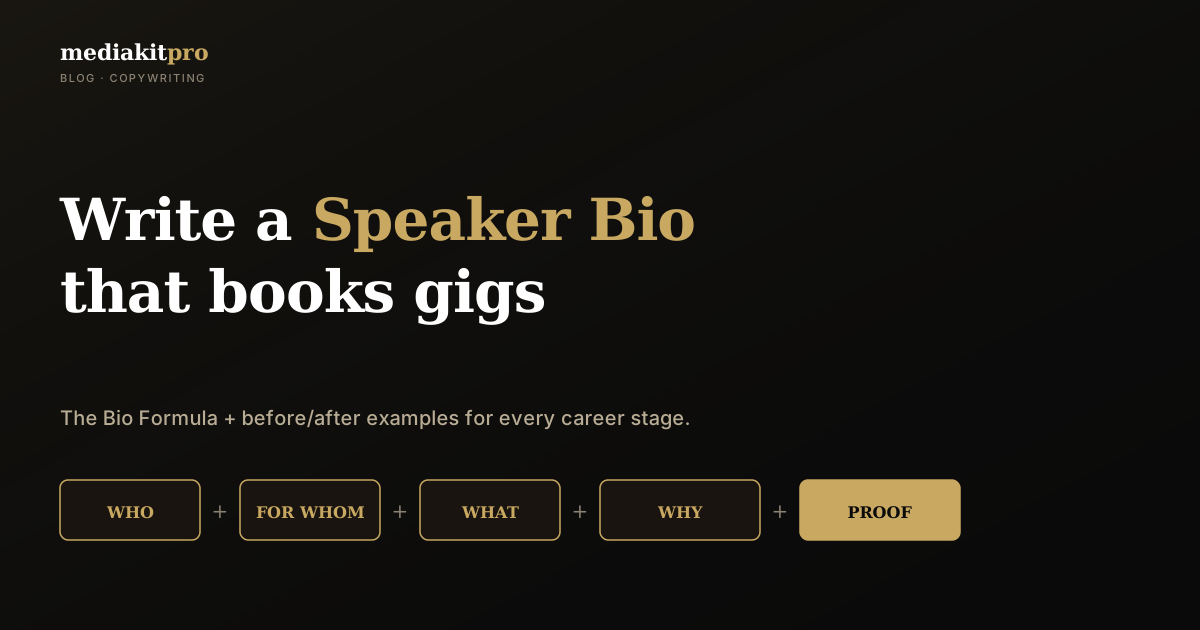
How to Write a Speaker Bio That Books Gigs (Templates Inside)
A strong speaker bio is the most important text in your media kit — and the one most people fumble. Here's the Bio Formula with before/after examples for every career stage.